

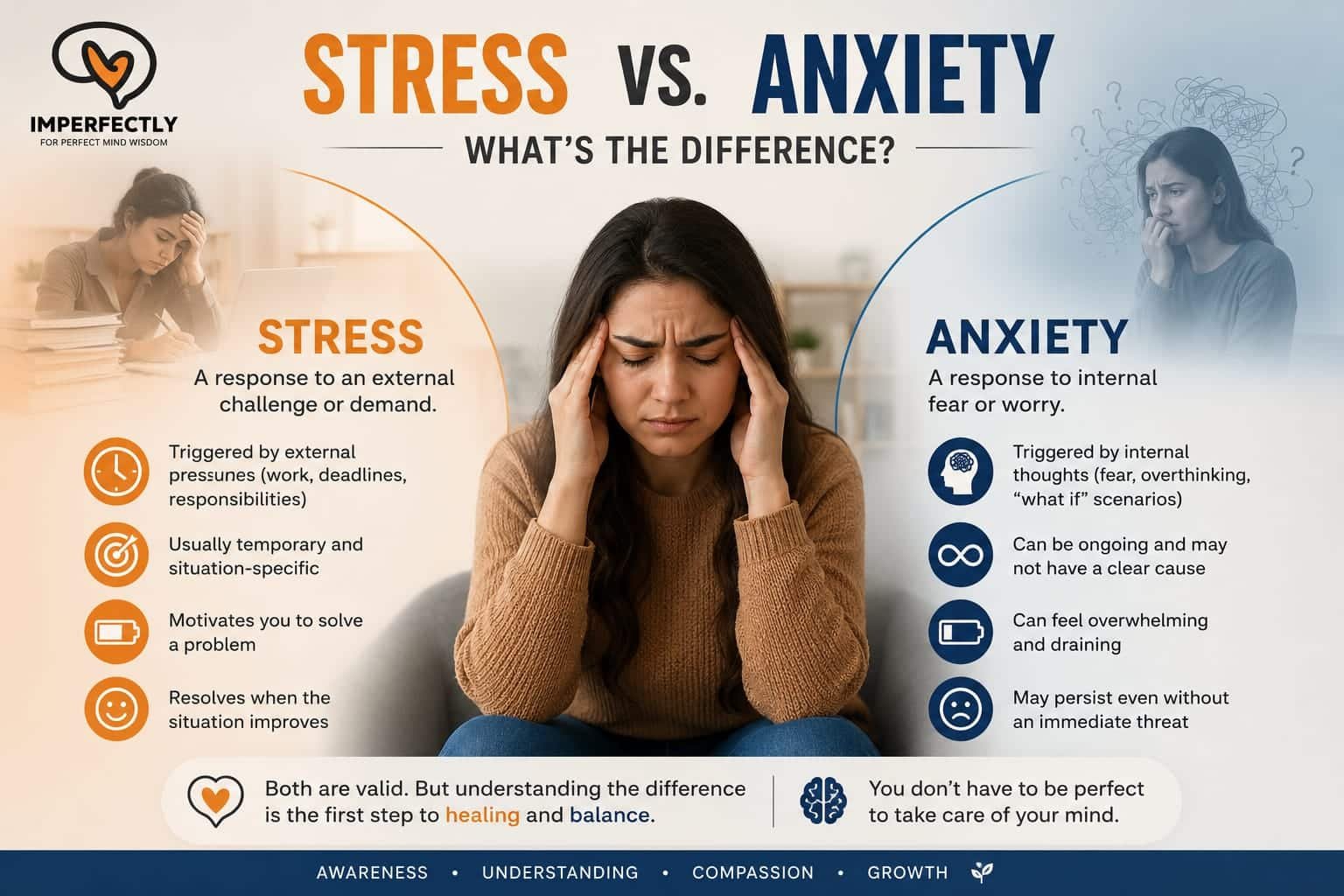
Stress vs Anxiety: What’s the Difference?
Everyone says they’re “stressed.” However, not everyone is experiencing anxiety.
After years of working with people facing emotional and psychological challenges, one pattern becomes clear: many individuals struggle to tell the difference between stress and anxiety. As a result, they often ignore symptoms, choose the wrong coping strategies, or delay seeking professional help until the situation becomes much harder to manage.
Although stress and anxiety can look similar, they are not the same. Understanding the difference is one of the most important steps toward protecting your mental health and responding appropriately before things become overwhelming.
Understanding Stress
Stress is your body’s natural response to a challenge or demand. In most cases, it begins because something outside you requires attention.
A looming deadline, financial pressure, relationship conflicts, examinations, health concerns, or major life changes can all trigger stress. Fortunately, when the situation improves or disappears, stress usually decreases as well.
Stress is not always harmful. In fact, moderate stress often helps people stay alert, focused, and motivated. The problem begins when stress becomes constant and the body never gets an opportunity to recover.
How Stress Usually Feels
People experiencing stress commonly notice:
- Feeling overwhelmed by responsibilities
- Muscle tension or body aches
- Irritability or frustration
- Difficulty concentrating
- Headaches
- Trouble sleeping
- Fatigue despite resting
- Digestive discomfort
Many professionals notice that once the project is completed, the exam is over, or the conflict is resolved, these symptoms gradually improve.
Understanding Anxiety
Unlike stress, anxiety does not always need an obvious reason to appear.
Instead, anxiety often continues even after the original problem has disappeared. In some cases, people cannot identify a clear cause at all.
Anxiety is driven more by anticipation than by the present situation. The mind constantly searches for possible dangers, even when everything appears normal.
Over time, this creates a cycle where worrying leads to physical symptoms, which then create even more worry.
Common Signs of Anxiety
Individuals experiencing anxiety may notice:
- Persistent worrying that feels difficult to control
- Racing thoughts
- Rapid heartbeat
- Chest tightness
- Shortness of breath
- Restlessness
- Feeling constantly “on edge”
- Difficulty relaxing
- Panic attacks in some cases
- Fear that something bad is about to happen
One important lesson from clinical practice is that many people with anxiety initially believe they have a heart problem because the physical symptoms can feel incredibly real. After several normal medical tests, they finally discover that anxiety was driving the symptoms all along.
Stress vs Anxiety: The Key Differences
Although both conditions affect the body and mind, they differ in several important ways.
| Stress | Anxiety |
|---|---|
| Usually linked to an external situation | May occur without an obvious trigger |
| Often improves after the situation resolves | Can continue long after the event ends |
| Generally short-term | Can become persistent or chronic |
| Motivation often remains intact | Daily functioning may become difficult |
| Usually manageable with rest and lifestyle changes | May require professional mental health treatment |
Understanding these differences helps people choose the right approach instead of assuming every emotional struggle is “just stress.”
Why People Often Confuse Them
There are several reasons why stress and anxiety are frequently mistaken for one another.
First, both produce similar physical symptoms, including headaches, poor sleep, fatigue, and muscle tension.
Second, many people normalize emotional distress. Statements like “everyone feels this way” or “I just need a vacation” often delay proper care.
Finally, anxiety often begins during prolonged periods of stress. If chronic stress is ignored for months, the brain can remain in a constant state of alertness even after life becomes calmer.
Real-World Lessons That Many People Learn Too Late
One common mistake is assuming that being busy automatically means being productive.
In reality, many professionals who describe themselves as “always stressed” are actually experiencing untreated anxiety. They continue working longer hours, believing that finishing more tasks will make the feeling disappear. Unfortunately, it rarely does.
Another frequent misconception is expecting relaxation alone to solve anxiety.
A weekend holiday, a day off, or watching a movie may temporarily reduce stress. However, anxiety often returns because the underlying thought patterns remain unchanged.
Many people also wait until symptoms become severe before asking for help.
By the time panic attacks, chronic insomnia, or emotional exhaustion develop, recovery usually takes longer than if support had been sought earlier.
Practical Ways to Manage Stress
If stress is connected to identifiable situations, practical adjustments often make a significant difference.
Focus on What You Can Control
Rather than worrying about everything at once, break large problems into smaller, manageable actions.
Protect Your Daily Routine
Regular sleep, balanced meals, movement, and scheduled breaks help your nervous system recover from daily pressure.
Set Healthy Boundaries
Many people unknowingly create chronic stress by saying “yes” to everything. Learning to decline unnecessary commitments protects both energy and mental health.
Talk Before It Builds Up
Sharing concerns with trusted family members, friends, or professionals often prevents stress from becoming overwhelming.
Practical Ways to Manage Anxiety
Managing anxiety usually requires more than simply removing external pressure.
Notice Your Thinking Patterns
Instead of accepting every fearful thought as fact, learn to question whether the evidence actually supports it.
Reduce Constant Stimulation
Continuous exposure to alarming news, social media comparisons, and work notifications can keep the brain in a heightened state of alertness.
Practice Consistency Instead of Perfection
Small daily habits often produce better long-term results than occasional intense efforts.
Seek Professional Support Early
If anxiety regularly interferes with work, relationships, sleep, or physical health, professional assessment can make a significant difference. Therapy, lifestyle modifications, and, in some cases, medication may all play an important role in recovery.
When Should You Seek Professional Help?
Occasional stress is a normal part of life.
However, professional guidance becomes important if you notice:
- Constant worry for several weeks or months
- Frequent panic attacks
- Difficulty performing everyday tasks
- Ongoing sleep problems
- Avoiding places or situations because of fear
- Physical symptoms without a clear medical explanation
- Feeling emotionally exhausted most days
Early intervention often prevents symptoms from becoming more severe and improves long-term outcomes.
Final Thoughts
Stress and anxiety may feel similar, yet they require different approaches.
Stress usually reflects the demands placed upon you by life. Anxiety, on the other hand, often continues because the mind remains trapped in a cycle of fear and anticipation.
Recognizing the difference allows you to respond more effectively, build healthier coping strategies, and seek support before emotional distress begins affecting every aspect of life.
Mental health deserves the same attention as physical health. The earlier concerns are identified, the easier they are to manage.
Start Your Mental Wellness Journey Today with Imperfectly
Your mental health journey doesn’t have to be something you navigate alone. At Imperfectly, we believe that seeking support is a sign of strength, not weakness. Whether you’re dealing with everyday stress, ongoing anxiety, relationship challenges, emotional burnout, or simply looking to improve your overall well-being, our integrated mental healthcare platform connects you with experienced professionals who provide compassionate, evidence-based care. From your first consultation to long-term recovery tracking, Imperfectly makes quality mental healthcare accessible, secure, and personalized—all in one place.
Download the Imperfectly App
📱 Connect with experienced Psychiatrists, Psychologists, Life Coaches, and Physicians.
📅 Book online or in-clinic appointments in minutes.
📈 Track your recovery journey with personalized wellness insights.
🔒 Access secure prescriptions, therapy notes, and medical records anytime.
💙 Experience complete 360° mental healthcare in one application.
Contact Imperfectly
Imperfectly – Your Trusted 360° Mental Health Platform
🌐 Website: https://imperfectly.co
📱 Patient Portal: https://imperfectly.co/application/
📞 Phone: +91 8448073838
📧 Email: admin@imperfectly.co