

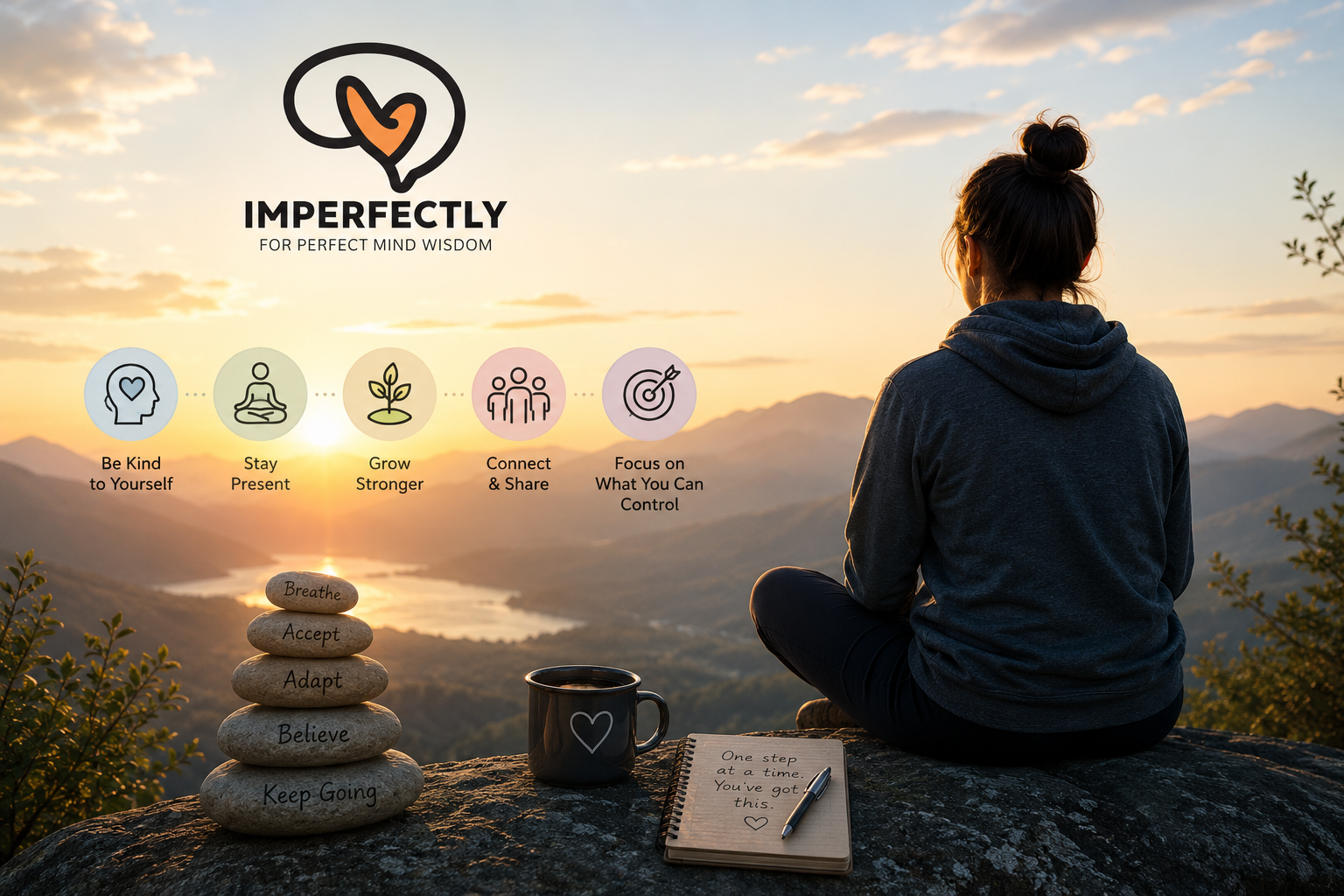
How to Build Emotional Resilience During Difficult Times | Imperfectly
Life has a way of testing us when we least expect it. A job loss, relationship breakdown, unexpected illness, financial pressure, or the loss of someone close can shake even the strongest person. After working with people facing anxiety, depression, burnout, trauma, and life transitions for more than a decade, one truth becomes clear: emotional resilience is not something people are born with—it is something they build through consistent habits, healthy relationships, and intentional choices.
One of the biggest misconceptions is that emotionally resilient people never feel overwhelmed. In reality, they experience fear, sadness, disappointment, and uncertainty just like everyone else. The difference is that they know how to respond to these emotions without allowing them to control every decision they make.
Emotional resilience is not about pretending everything is fine. Instead, it is about adapting, recovering, and continuing to move forward even when life feels uncertain.
Understanding Emotional Resilience Beyond the Buzzword
Many people confuse resilience with mental toughness. However, they are not the same.
Mental toughness often focuses on pushing through discomfort without showing emotion. Emotional resilience, on the other hand, allows people to acknowledge their emotions while continuing to function in healthy ways.
In clinical settings, one pattern appears repeatedly. Individuals who recover faster from emotional setbacks are not those who suppress emotions. Rather, they allow themselves to process difficult feelings, seek support when necessary, and gradually regain stability.
Think of resilience like a tree during a storm. A rigid tree is more likely to break, whereas a flexible tree bends with the wind before standing upright again.
That flexibility is what emotional resilience truly represents.
Why Difficult Times Affect Everyone Differently
People often compare themselves with others.
One person may recover quickly after losing a job, while another struggles for months. Someone may cope well with a breakup, whereas another develops anxiety or depression.
This difference is influenced by several factors, including:
Previous Life Experiences
Individuals who have successfully overcome challenges before often develop greater confidence in their ability to handle future setbacks.
Support Systems
People surrounded by supportive family members, trusted friends, or mental health professionals generally recover more effectively than those facing challenges alone.
Physical Health
Poor sleep, chronic stress, unhealthy eating habits, and lack of physical activity significantly reduce emotional resilience.
Personal Thinking Patterns
People who constantly expect the worst usually experience more emotional distress than those who maintain balanced thinking.
The Most Common Mistake People Make
One of the biggest mistakes seen repeatedly in therapy is waiting until life completely falls apart before asking for help.
Many people believe they should be able to “handle it themselves.”
Unfortunately, emotional problems rarely disappear simply because they are ignored.
Ignoring stress often leads to:
- Chronic anxiety
- Emotional exhaustion
- Relationship conflicts
- Sleep disturbances
- Reduced work performance
- Physical symptoms such as headaches or stomach discomfort
Seeking support early is a sign of emotional awareness—not weakness.
Accept Your Emotions Instead of Fighting Them
One lesson that consistently emerges from years of clinical practice is this:
People heal faster when they stop fighting every uncomfortable emotion.
Instead of saying:
“I shouldn’t feel anxious.”
Try asking:
“What is this anxiety trying to tell me?”
Similarly, instead of hiding sadness, become curious about its source.
Emotions are information. They deserve attention rather than judgment.
Build Small Daily Habits Instead of Waiting for Motivation
Many people believe resilience develops during major life events.
Actually, it grows through ordinary daily routines.
Healthy habits that strengthen emotional resilience include:
Prioritizing Quality Sleep
Sleep restores emotional regulation. Even one week of poor sleep can increase irritability, anxiety, and emotional sensitivity.
Moving Your Body
Exercise does far more than improve physical health. Regular movement helps regulate stress hormones and boosts mood naturally.
Limiting Negative Information
Constant exposure to distressing news and social media often increases emotional fatigue.
Choose reliable information sources and set healthy boundaries around screen time.
Practicing Emotional Check-ins
Ask yourself daily:
- What am I feeling?
- Why am I feeling this?
- What do I need today?
These simple questions improve emotional awareness over time.
Learn Healthy Coping Strategies
During difficult periods, people naturally search for relief.
Unfortunately, not every coping strategy is healthy.
Temporary escapes such as excessive alcohol use, emotional eating, endless scrolling, or avoiding responsibilities may reduce discomfort for a few hours. However, they often increase emotional distress later.
Healthier alternatives include:
- Deep breathing exercises
- Mindfulness practice
- Journaling
- Talking with someone you trust
- Spending time in nature
- Creative hobbies
- Professional counselling or therapy
Healthy coping does not eliminate pain immediately, but it helps prevent additional emotional damage.
Develop Self-Compassion
One surprising observation from years of working with clients is that many people speak to themselves far more harshly than they would ever speak to a friend.
Imagine a close friend loses their job.
You probably would not say:
“You are a failure.”
Yet many people say exactly that to themselves.
Self-compassion is not making excuses.
Instead, it means acknowledging suffering without adding unnecessary self-criticism.
Research consistently shows that self-compassion improves resilience, motivation, and emotional recovery.
Build Strong Relationships Before You Need Them
Resilient people rarely face challenges entirely alone.
Strong emotional support often becomes the greatest protective factor during stressful periods.
Invest time in:
- Meaningful friendships
- Family relationships
- Community groups
- Support networks
- Professional mental health care
Remember, asking for support is one of the strongest decisions a person can make.
Know When Professional Support Can Help
There comes a point when self-help strategies are no longer enough.
If emotional distress begins affecting work, relationships, sleep, appetite, or daily functioning for several weeks, professional support should be considered.
Psychologists, psychiatrists, and therapists help people understand emotional patterns, develop healthier coping mechanisms, and create personalized recovery plans.
Early intervention often prevents emotional difficulties from becoming more severe.
Real Resilience Is About Recovery, Not Perfection
One important lesson learned from years of working in mental healthcare is that resilient people still have difficult days.
They still experience setbacks.
They still cry.
They still feel uncertain.
However, they continue showing up for themselves.
Resilience is measured less by how often life knocks you down and more by how gently and consistently you help yourself stand back up.
Every small healthy choice contributes to long-term emotional strength.
Start Your Mental Wellness Journey Today with Imperfectly
Mental well-being is not built in a single day, nor does it require you to face life’s challenges alone. At Imperfectly, we believe that everyone deserves compassionate, accessible, and evidence-based mental healthcare. Whether you’re dealing with stress, anxiety, depression, burnout, relationship challenges, or simply looking to improve your emotional resilience, our multidisciplinary team is here to support you every step of the way. Through expert guidance, personalized care plans, secure digital tools, and continuous progress tracking, Imperfectly empowers you to take charge of your mental health with confidence. Your journey toward a healthier, more balanced life can begin today—with professional support that understands your unique needs.
Download the Imperfectly App
📱 Connect with experienced Psychiatrists, Psychologists, Life Coaches, and Physicians.
📅 Book online or in-clinic appointments in minutes.
📈 Track your recovery journey with personalized wellness insights.
🔒 Access secure prescriptions, therapy notes, and medical records anytime.
💙 Experience complete 360° mental healthcare in one application.
Contact Imperfectly
Imperfectly – Your Trusted 360° Mental Health Platform
🌐 Website: https://imperfectly.co
📱 Patient Portal: https://imperfectly.co/application/
📞 Phone: +91 8448073838
📧 Email: admin@imperfectly.co