

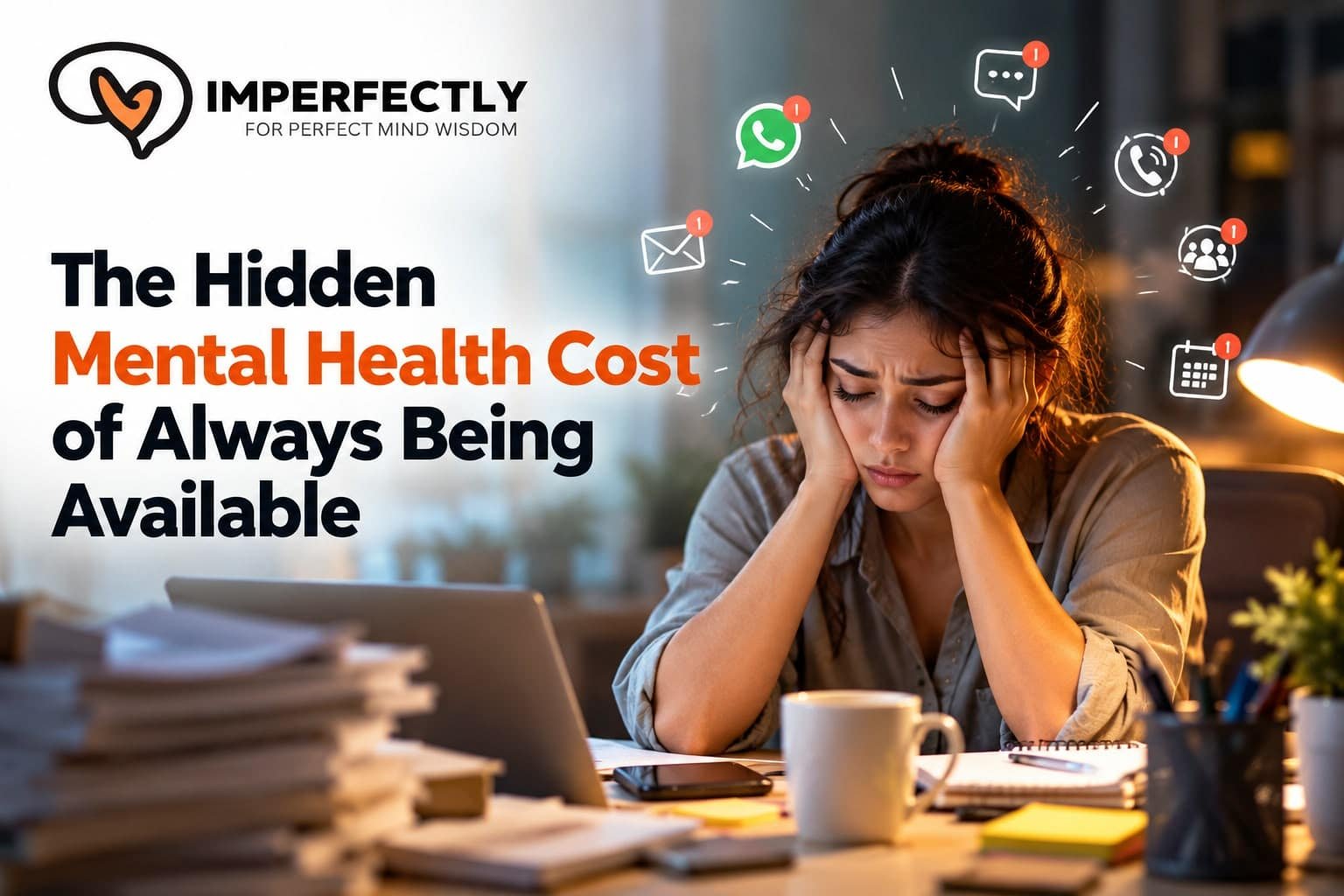
The Hidden Mental Health Cost of Always Being Available
Have you ever felt exhausted even after spending the entire day at home? Perhaps you answered work messages during dinner, replied to a friend’s late-night call despite feeling tired, or checked your phone repeatedly because you were afraid of missing something important. These everyday experiences reveal the mental health cost of always being available. Although staying reachable can make us feel responsible, supportive, and productive, it can gradually leave us emotionally drained, mentally distracted, and disconnected from our own needs.
In a world where messages arrive instantly and people expect quick replies, being available has almost become a social expectation. However, responding to everyone all the time is not the same as being emotionally present. Sometimes, the most important message we ignore is the one our own mind and body are trying to send us.
What Does Always Being Available Really Mean?
Always being available does not necessarily mean working around the clock. It can also mean feeling that you must reply immediately, listen to everyone’s problems, accept every request, or remain reachable even when you desperately need rest.
For example, an employee might finish work at 6 p.m. but continue checking office messages until bedtime. A friend might feel guilty for not answering a call immediately. Similarly, a parent may spend the entire day caring for others without making time for their own emotional needs.
Although these situations look different, they share one common pattern: personal time no longer feels entirely personal.
Over time, this constant sense of responsibility can make relaxation feel uncomfortable. Even when nothing urgent is happening, the mind may continue anticipating the next notification, request, or problem.
The Hidden Mental Health Cost of Always Being Available
The effects of constant availability often develop gradually. You might not notice them after one busy day, but repeated interruptions and emotional demands can become difficult to manage.
1. Emotional Exhaustion From Always Being Available
One of the most overlooked consequences is emotional exhaustion. When you continually respond to other people’s needs, you may have little energy left to understand your own feelings.
Imagine a person who is always the dependable friend. Everyone calls them during a difficult breakup, family disagreement, or stressful day. They listen patiently and offer support, even when they are struggling themselves.
Eventually, they may start feeling irritated when the phone rings. They might avoid conversations or feel guilty about wanting some distance.
This does not automatically mean they have stopped caring. Instead, it may indicate that their emotional capacity is being stretched too far.
The practical lesson: Supporting others does not require you to be emotionally available at every moment. You can care about someone and still need time to recover.
2. Constant Availability Can Increase Stress and Anxiety
When people believe they must respond immediately, ordinary notifications can begin to feel like demands.
A work message after office hours may trigger thoughts such as, “What if my manager thinks I am irresponsible?” A missed call might create worries about disappointing someone. Even an unread message can make it difficult to concentrate on a movie, meal, or conversation.
Consequently, the mind gets fewer opportunities to settle down. Instead of enjoying the present moment, you remain mentally prepared for the next interruption.
The mental health cost of always being available becomes especially noticeable when you feel uneasy simply because your phone is silent or out of reach.
However, not everyone who checks their phone frequently has an anxiety disorder. The important distinction is whether the habit is interfering with sleep, relationships, concentration, or everyday functioning.
3. Poor Sleep and Difficulty Switching Off
Rest is not only about lying down or getting enough hours in bed. It also involves having the opportunity to disengage from responsibilities.
For instance, checking a work notification shortly before sleeping may prompt you to think about tomorrow’s deadlines. Responding to a friend’s emotional message late at night may leave you worrying about their situation long after the conversation ends.
As a result, bedtime can become an extension of the working day rather than a period of recovery.
To reduce this pressure, consider creating a short evening routine. Silence non-urgent notifications, move your phone away from your bed, and decide which messages genuinely require an immediate response.
These small changes can help establish a clearer distinction between being reachable and being available to respond.
4. Resentment Toward People You Genuinely Care About
Constant availability can create an uncomfortable contradiction: you may want to help someone while simultaneously feeling frustrated that they keep asking for your time.
This often happens when people agree to requests automatically rather than checking whether they have the time or emotional energy to fulfil them.
For example, you might agree to another phone call because you do not want to upset a friend. Later, however, you may feel irritated, withdraw from the conversation, or respond more sharply than you intended.
Over time, repeated experiences like these can affect relationships.
The problem is not necessarily that people are asking for too much. Sometimes, they simply do not know that your capacity has changed because you have never communicated your limits.
Healthy boundaries make expectations clearer and can protect relationships from unnecessary frustration.
5. Losing Touch With Your Own Needs
When your day revolves around responding to other people, your personal needs can become an afterthought.
You may postpone meals, skip exercise, delay personal appointments, or repeatedly sacrifice activities that help you feel balanced. You might also struggle to answer a simple question: “What do I need right now?”
This can happen because your attention is constantly directed outward.
Eventually, you may begin measuring your value by how useful, responsive, or dependable you are to others. However, your worth is not determined by how quickly you reply to messages or how many problems you solve.
Your needs deserve consideration even when nobody else is asking you to meet them.
Why Do We Feel Guilty About Not Replying Immediately?
Understanding the mental health cost of always being available also means understanding why setting limits can feel so uncomfortable.
The Fear of Disappointing Others
Some people worry that a delayed response will make them seem uncaring or unreliable. They may believe that saying no will damage a friendship or disappoint a family member.
Consequently, they agree to things they do not have the capacity to manage.
Yet a healthy relationship should allow room for reasonable delays, changing circumstances, and personal boundaries. A person who cares about you may occasionally feel disappointed, but that does not mean you have done something wrong.
The Pressure to Prove Your Reliability
At work, quick replies are sometimes mistaken for dedication. Employees may feel that responding after hours demonstrates commitment, even when their official responsibilities have ended.
Similarly, in friendships and family relationships, being the person who is always available can become part of your identity.
The difficulty arises when a helpful habit becomes an unspoken obligation. Once people become accustomed to immediate responses, taking a break may feel like breaking a rule that nobody explicitly established.
Digital Culture and the Expectation of Instant Responses
Messaging apps have made communication easier, but they have also blurred the boundaries between work, relationships, and personal time.
A message can arrive at any hour, creating the impression that a response should follow just as quickly. Read receipts and online status indicators can add to this pressure.
Nevertheless, receiving a message does not automatically create an obligation to answer immediately. Convenience for the sender does not have to become a constant demand on the receiver.
Signs That Constant Availability Is Affecting Your Mental Well-Being
You do not need to wait until you feel completely burned out before making changes. Instead, pay attention to patterns that suggest your availability is becoming difficult to manage.
Some possible signs include:
- Feeling anxious or guilty when you cannot reply immediately.
- Checking notifications even when you have decided to rest.
- Finding it difficult to concentrate because you are anticipating messages.
- Feeling emotionally drained after repeatedly listening to other people’s problems.
- Saying yes to requests and regretting the decision later.
- Becoming irritated with people whose messages you would previously have welcomed.
- Losing sleep because of work-related or personal conversations.
- Feeling that your own needs are always less important than everyone else’s.
These experiences do not automatically indicate a mental health condition. However, if they persist or interfere with your daily life, it may be helpful to speak with a qualified mental health professional.
How to Set Healthy Boundaries Without Feeling Selfish
The goal is not to become unavailable to everyone. Instead, it is to make your availability more intentional.
1. Stop Treating Every Message as Urgent
Before replying, ask yourself whether the message genuinely requires an immediate response.
A routine work update, a casual social message, and an urgent safety concern are not the same thing. Responding according to the situation rather than automatically can reduce unnecessary pressure.
You can also disable non-essential notifications or check messages at planned intervals, depending on your responsibilities.
2. Use Clear, Respectful Communication
You do not need to provide a long explanation every time you are unavailable. A short, honest response can establish expectations without creating unnecessary conflict.
For example:
- “I’m away from my phone right now, but I’ll get back to you later.”
- “I want to give this conversation my full attention. Can we talk tomorrow?”
- “I’m unavailable after work hours unless something is urgent.”
- “I care about what you’re going through, but I don’t have the emotional energy for a long conversation tonight.”
These statements communicate care while recognising your limits.
3. Create Boundaries Around Work
If work messages regularly enter your personal time, consider discussing response expectations with your manager or team.
For example, agree on which situations require after-hours contact and which can wait until the next working day. Where your role permits, mute work notifications outside agreed hours.
Of course, some jobs involve genuine on-call responsibilities. In those cases, boundaries may need to focus on protected rest periods, shared coverage, and realistic recovery time rather than complete disconnection.
4. Make Room for Emotional Recovery
After a demanding conversation or stressful workday, give yourself time to decompress before moving on to another responsibility.
You could take a short walk, eat without checking your phone, listen to music, journal, or spend a few minutes sitting quietly.
The activity itself does not need to be complicated. What matters is allowing your attention to return to your own experience instead of immediately responding to another demand.
5. Practise Saying No Before You Reach Your Limit
Many people wait until they are exhausted before refusing a request. By that point, their response may come out as frustration or withdrawal.
Instead, begin with small, manageable boundaries. You might decline an optional meeting, postpone a non-urgent conversation, or explain that you cannot take on an additional task this week.
Initially, you may still feel guilty. However, discomfort does not necessarily mean your decision is wrong. It may simply mean that you are practising a different way of relating to other people’s expectations.
What If People React Badly to Your Boundaries?
This is where setting limits can become particularly challenging.
Some people will adjust once they understand your availability. Others may need reminders, especially if they are accustomed to receiving immediate responses.
Try to remain consistent and communicate respectfully. You can acknowledge someone’s disappointment without automatically reversing your decision.
For instance, if a colleague repeatedly sends non-urgent messages late at night, you might explain your working hours and respond during the next working day. If a friend expects you to be available for every difficult moment, you can offer another time to talk or help them identify additional sources of support.
However, boundaries should also be realistic. Emergencies, caregiving responsibilities, and essential professional duties sometimes require flexibility. The aim is not rigidly refusing every request; it is avoiding a pattern in which your needs are always sacrificed.
If a relationship depends on you being permanently accessible, it may be worth examining whether the expectations within that relationship are fair and sustainable.
When Should You Consider Professional Mental Health Support?
Occasional tiredness or frustration is a normal part of life. However, persistent emotional exhaustion deserves attention, especially when it affects several areas of your life.
Consider seeking professional support if you regularly experience overwhelming anxiety, ongoing sleep difficulties, persistent low mood, difficulty concentrating, or an inability to disengage from responsibilities even when you have time to rest.
A psychologist can help you explore people-pleasing patterns, communication difficulties, stress management, and boundary-setting. A psychiatrist may be appropriate when symptoms require a medical assessment or when medication could be part of a treatment plan.
The right support depends on your circumstances. You do not have to wait for a crisis or a formal diagnosis before discussing concerns about your mental well-being with a qualified professional.
Your Time and Emotional Energy Matter
The hidden mental health cost of always being available is not simply the number of hours spent replying to messages. It is the gradual loss of space to rest, reflect, maintain relationships on your own terms, and recognise your own needs.
Being dependable is valuable. Being compassionate is valuable. However, neither requires you to ignore your limits indefinitely.
Start with one manageable change: delay a non-urgent reply, protect part of your evening, or communicate a boundary you have been avoiding. Over time, these choices can help you build a healthier relationship with your responsibilities and the people around you.
Remember, you can be available to others without being available at every moment. Protecting your mental well-being is not a rejection of the people you care about; it is part of making your care sustainable.
Start Your Mental Wellness Journey Today with Imperfectly
At Imperfectly, we believe mental health care should be accessible, personalised, and centred around your individual needs. Whether you are experiencing ongoing stress, emotional exhaustion, relationship difficulties, or challenges with everyday responsibilities, our platform helps you connect with qualified mental health professionals and explore appropriate support. Through our integrated digital healthcare services, you can take a more informed step towards understanding your mental well-being, developing healthier coping strategies, and making space for yourself without feeling that you have to manage everything alone.
Download the Imperfectly App
📱 Connect with experienced Psychiatrists, Psychologists, Life Coaches, and Physicians.
📅 Book online or in-clinic appointments in minutes, where available.
📈 Track your recovery journey with personalised wellness insights.
🔒 Access secure prescriptions, therapy notes, and medical records anytime, where supported.
💙 Experience complete 360° mental healthcare in one application.
Contact Imperfectly
Imperfectly – Your Trusted 360° Mental Health Platform
🌐 Website: https://imperfectly.co
📱 Patient Portal: https://imperfectly.co/application/
📞 Phone: +91 8448073838
📧 Email: admin@imperfectly.co