

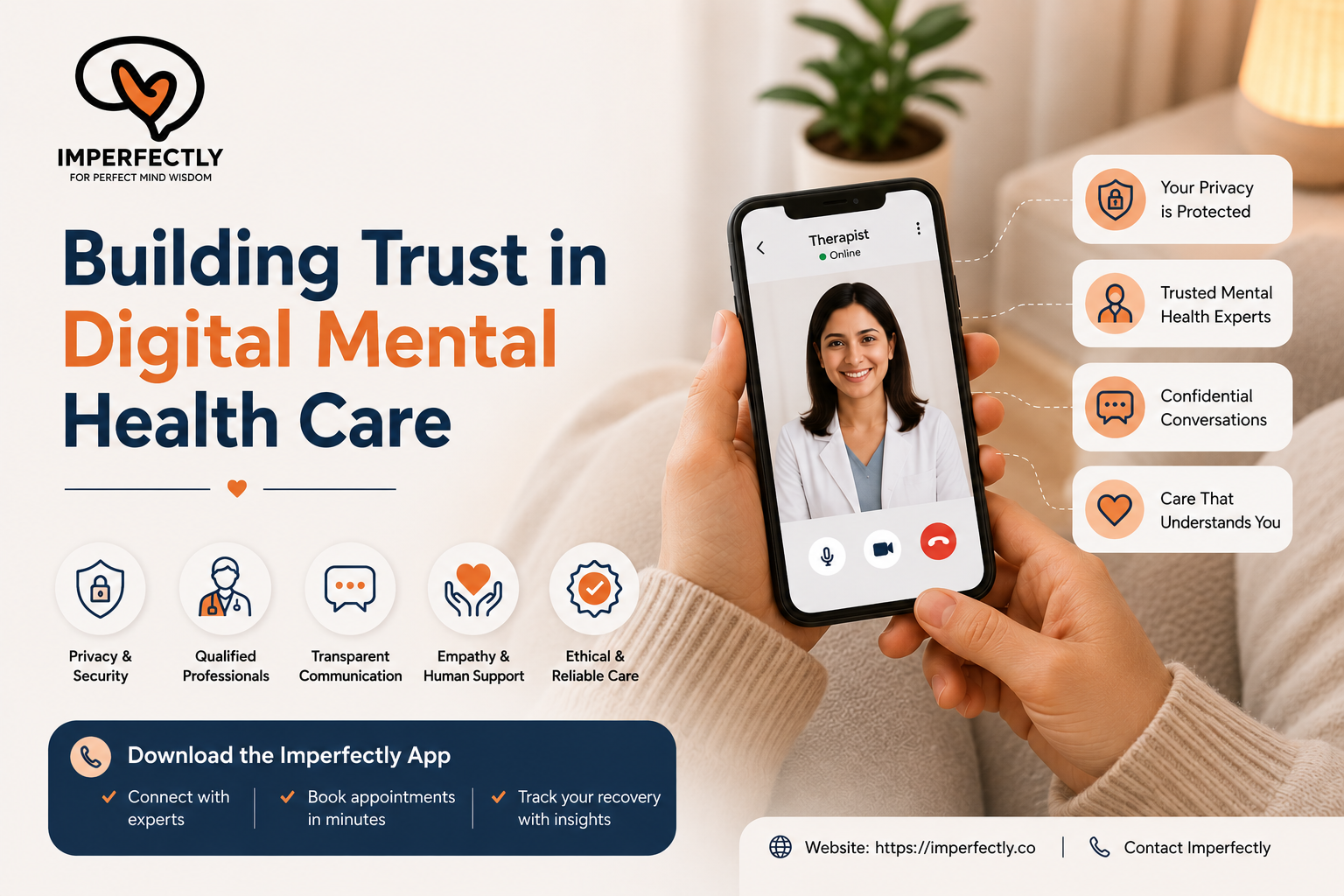
Building Trust in Digital Mental Health Care
Trust is the foundation of secure mental healthcare. When someone shares their fears, thoughts, personal history, or struggles through a digital platform, they need to feel confident that their information is protected and that a qualified professional is genuinely listening. However, trust in digital mental health care is not created simply by adding a privacy policy or displaying a security badge. It develops through hundreds of small interactions—from how a patient books an appointment to how their records are handled and how clearly a professional communicates with them.
Digital mental health care has made professional support more accessible than ever. At the same time, it has introduced a question that every responsible mental health platform must take seriously: Can people feel safe enough to be honest when care happens through a screen?
In practice, that question is just as important as technology, convenience, or accessibility.
Why Trust Matters in Secure Mental Healthcare
Mental healthcare is different from many other digital services because patients are not simply sharing contact details or payment information. They may disclose deeply personal experiences, family concerns, relationship difficulties, trauma, medication history, or thoughts they have never discussed openly with anyone else.
Therefore, a patient’s perception of safety directly affects the quality of the interaction.
A person who doubts the confidentiality of a platform may hold back important information. Consequently, even an experienced psychiatrist or psychologist may receive an incomplete picture of what the patient is experiencing.
For example, a patient may be comfortable saying, “I’ve been feeling anxious,” but hesitate to explain what triggers the anxiety if they are unsure who can access their information.
That hesitation matters.
Secure mental healthcare is not only about protecting data. It is also about creating enough psychological safety for people to speak honestly.
What Patients Actually Look for Before Trusting a Digital Platform
From years of working around healthcare communication and patient experiences, one lesson repeatedly stands out: people rarely evaluate trust using one single feature.
Instead, they look at the entire experience.
Clear Information About Privacy
Patients should not have to search through complicated language to understand what happens to their information.
A trustworthy platform should communicate clearly:
- What information is collected
- Why it is collected
- Who can access it
- How medical records are handled
- How prescriptions and therapy notes are protected
- What happens when an account is closed
Moreover, privacy information should be understandable to ordinary users rather than written only for technical or legal professionals.
Qualified Mental Health Professionals
Technology cannot replace professional judgment.
A polished application may look impressive, but patients ultimately want to know whether the person supporting them is appropriately qualified.
Therefore, digital platforms should make professional information easy to understand, including relevant qualifications, areas of practice, and the type of support offered.
This is particularly important because patients can sometimes mistake general wellness content for professional mental healthcare.
Consistency Builds Confidence
Trust is also created through predictable experiences.
If an appointment confirmation says one thing but the application shows another, confidence drops. Likewise, unclear cancellation policies, unexplained delays, or difficulty accessing medical information can make patients question the reliability of the entire service.
In other words, secure mental healthcare requires operational trust as well as technological security.
How Technology Can Support Secure Mental Healthcare
Technology can make mental healthcare more accessible, but it must be designed around the patient’s needs rather than around technology itself.
Protecting Sensitive Patient Information
Mental health information deserves careful handling because of its highly personal nature.
Digital healthcare platforms should use appropriate safeguards around patient accounts, records, prescriptions, appointment information, and communications.
However, one common mistake is treating security as something that happens entirely behind the scenes.
Patients also need confidence that their information is being handled responsibly.
That means platforms should communicate security practices clearly without making exaggerated promises.
Giving Patients Better Control
Trust increases when people understand and control their healthcare experience.
For instance, patients should be able to access relevant information, understand their appointments, and know where their healthcare records are maintained.
When patients feel that information is hidden from them, uncertainty increases. Conversely, transparent access and communication can make digital care feel much more dependable.
Avoiding Unnecessary Complexity
Another real-world problem is overcomplicated technology.
If a patient has to navigate several screens simply to find an appointment, prescription, or important healthcare information, frustration can quickly replace trust.
Good digital mental healthcare should make the important things easier—not create another obstacle for someone who may already be overwhelmed.
The Human Side of Digital Mental Healthcare
One of the biggest misconceptions about digital mental health care is that technology makes care impersonal.
It can—but it doesn’t have to.
The human element depends heavily on how professionals communicate.
Listening Still Matters
A video consultation is still a clinical interaction.
A psychiatrist or psychologist who listens carefully, explains their reasoning, checks the patient’s understanding, and allows space for questions can create a strong therapeutic relationship even when the consultation happens remotely.
On the other hand, rushing through an appointment or treating every interaction like a checklist can make patients feel disconnected.
Technology provides the connection. The professional relationship creates the trust.
Empathy Cannot Be Automated
Automated reminders and digital workflows can improve convenience. However, they cannot replace empathy.
A patient who is anxious about beginning therapy may need reassurance about what to expect. Someone seeking psychiatric support for the first time may have concerns about medication. Another person may simply feel embarrassed about asking for help.
These situations require human understanding.
Consequently, the best digital platforms use technology to remove administrative friction while allowing professionals to focus more attention on the patient.
Common Mistakes That Damage Trust
Building trust takes time, but losing it can happen very quickly.
Making Promises That Technology Cannot Guarantee
Statements such as “completely risk-free” or unrealistic guarantees about privacy can create more harm than reassurance.
Responsible healthcare communication should be accurate and transparent.
Patients appreciate honesty more than marketing claims.
Hiding Important Information
When pricing, professional credentials, appointment processes, or privacy information are difficult to find, users may become suspicious.
Transparency should therefore be part of the user experience—not something added after a complaint.
Treating Every Patient the Same
Mental healthcare is personal.
A person seeking support for work-related stress may need a very different experience from someone looking for psychiatric treatment.
Digital platforms should provide access to appropriate professionals and allow care to be tailored to the individual’s needs.
Overloading Patients With Technology
More features do not automatically mean better healthcare.
Too many notifications, complicated dashboards, unnecessary questionnaires, and confusing navigation can increase stress.
A useful rule is simple: Every digital feature should have a clear benefit for the patient or professional.
Building Trust Before the First Appointment
Trust begins before the patient speaks with a professional.
The website, application, appointment process, professional profiles, and communication all contribute to the first impression.
For example, a patient may notice whether:
- The platform explains its services clearly
- Professional information is easy to find
- Appointment booking feels straightforward
- Privacy information is accessible
- Communication feels respectful
- Support is available when something goes wrong
These details may appear small individually. Nevertheless, together they determine whether someone feels comfortable taking the next step.
Trust Continues After the Consultation
The patient experience should not end when the appointment ends.
Follow-up communication, access to relevant records, prescription management, future appointment scheduling, and progress tracking can all influence whether a person feels supported.
Furthermore, continuity becomes particularly valuable in mental healthcare.
A patient may need several conversations before feeling comfortable discussing certain concerns. A platform that supports continuity can therefore help strengthen the relationship between patient and professional over time.
This is where secure mental healthcare becomes more than a technical concept. It becomes an ongoing patient experience built around privacy, professionalism, accessibility, and human connection.
How Imperfectly Approaches Trust in Digital Mental Healthcare
At Imperfectly, the goal is to make professional mental healthcare more accessible while keeping the patient experience centered around trust, privacy, professional support, and continuity of care. Through one platform, users can connect with psychiatrists, psychologists, life coaches, and physicians, book appointments, access relevant healthcare information, and follow their wellness journey. The focus is not simply on putting healthcare online; it is on creating a connected experience where people can seek support with greater confidence and convenience.
What the Future of Secure Mental Healthcare Should Look Like
The future of digital mental healthcare should not be defined by how many features an application contains.
It should be defined by how confidently a patient can use those features.
A strong digital mental healthcare experience should make patients feel:
- Safe when sharing sensitive information
- Informed about their care
- Respected throughout the process
- Connected with qualified professionals
- In control of their healthcare journey
- Supported beyond a single appointment
Ultimately, technology should work quietly in the background while the human relationship remains at the center.
That is the real opportunity for digital mental healthcare: not replacing human care, but making trusted professional support easier to reach and easier to continue.
Start Your Mental Wellness Journey Today with Imperfectly
Taking the first step toward better mental wellbeing doesn’t have to feel overwhelming. Imperfectly brings different aspects of mental healthcare together in one platform, helping you connect with experienced professionals, manage appointments, access relevant healthcare information, and stay connected with your wellness journey. Whether you are looking for professional guidance, ongoing support, or a more convenient way to manage your mental healthcare, Imperfectly is designed to make the process simpler, more connected, and patient-focused.
Download the Imperfectly App
📱 Connect with experienced Psychiatrists, Psychologists, Life Coaches, and Physicians
📅 Book online or in-clinic appointments in minutes.
📈 Track your recovery journey with personalised wellness insights.
🔒 Access secure prescriptions, therapy notes, and medical records anytime.
💙 Experience complete 360° mental healthcare in one application.
Contact Imperfectly
Imperfectly – Your Trusted 360° Mental Health Platform
🌐 Website: https://imperfectly.co
📱 Patient Portal: https://imperfectly.co/application/
📞 Phone: +91 8448073838
📧 Email: admin@imperfectly.co