

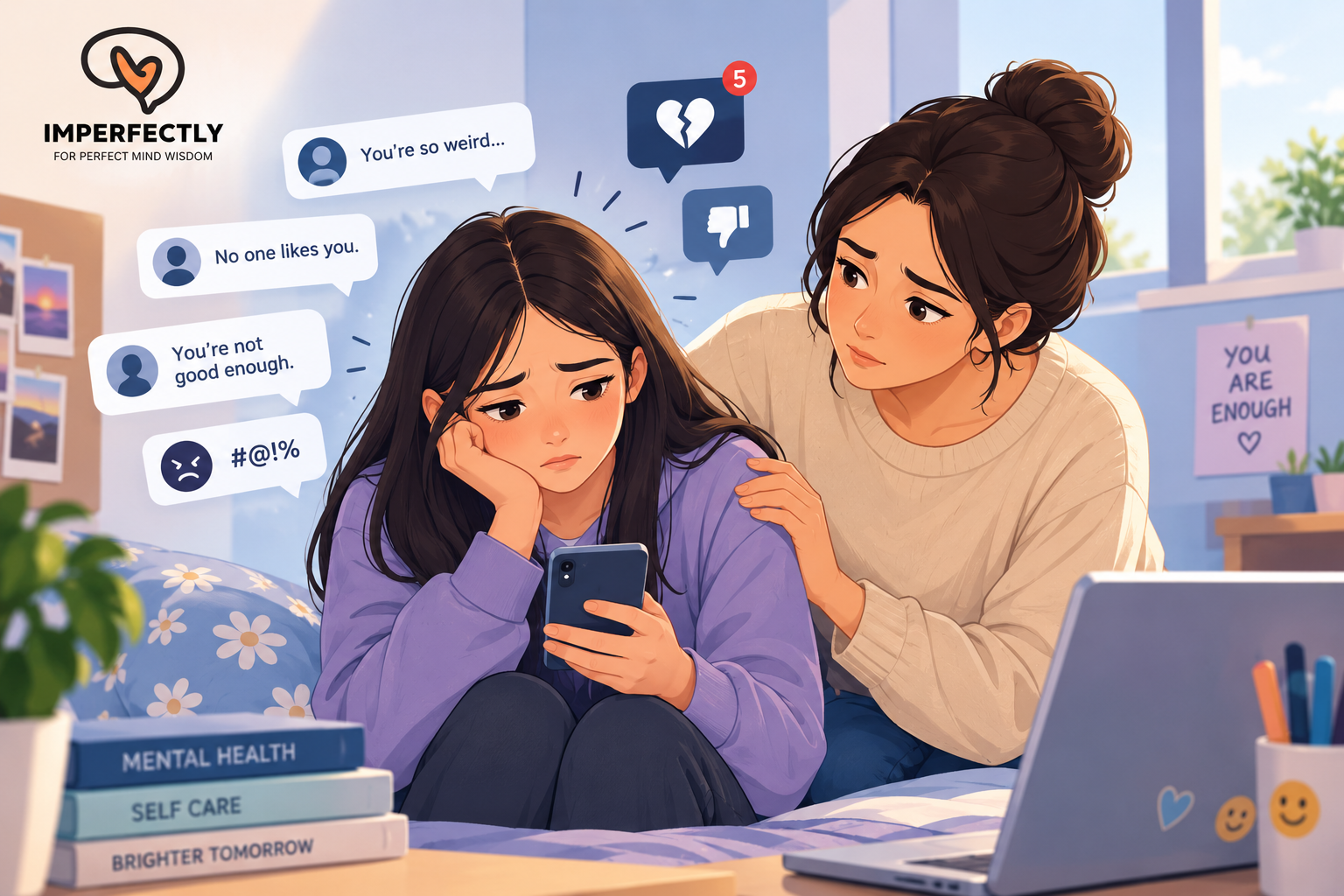
Cyberbullying and Mental Health: Signs Parents Should Watch For
Cyberbullying and mental health are closely connected, especially for children and teenagers who spend a large part of their social lives online. A hurtful comment, embarrassing photo, threatening message, or private conversation shared without permission can follow a young person long after school ends. Unlike traditional bullying, cyberbullying can reach a child at home, late at night, and sometimes in front of hundreds of people at once. As a result, parents may notice changes in mood, sleep, school performance, friendships, or everyday behaviour before their child ever says, “Someone is bullying me.”
What Cyberbullying Really Looks Like
Cyberbullying is more than simply receiving an unpleasant message online. It can involve repeated harassment, humiliation, threats, exclusion, impersonation, spreading rumours, sharing private images, or deliberately encouraging others to attack or isolate someone.
For parents, one of the biggest challenges is that cyberbullying does not always look obvious.
A teenager may continue using their phone while quietly becoming distressed by what is happening on it. In other cases, they may suddenly stop using social media altogether. Both reactions can be important.
For example, a child who normally enjoys group chats may begin checking their phone repeatedly but refuse to explain why. Another child may become unusually anxious whenever a notification appears. These small behavioural changes can be more revealing than a direct complaint.
That is why understanding cyberbullying and mental health requires parents to look beyond screen time alone.
How Cyberbullying Can Affect Mental Health
The psychological impact of online bullying can build gradually. A single unpleasant interaction may be upsetting, but repeated humiliation, threats, or social rejection can make a child feel that there is no safe place to escape.
In real-world situations, professionals often see several areas of life changing at the same time.
Anxiety and Constant Worry
A child experiencing cyberbullying may become unusually worried about what others are saying or posting about them.
They may repeatedly check messages, ask whether someone has posted something about them, or become nervous before opening social media. Sometimes the child appears distracted because they are mentally preparing for the next unpleasant interaction.
Withdrawal From Friends and Family
Another common sign is withdrawal.
A teenager who once spent time with friends may suddenly prefer staying alone. They might stop participating in family conversations, avoid social events, or spend more time behind a closed bedroom door.
However, parents should avoid assuming that every teenager who wants privacy is being bullied. Adolescents naturally seek independence. The concern becomes greater when withdrawal is accompanied by a noticeable change in mood, confidence, sleep, school attendance, or relationships.
Changes in Sleep
Online bullying can continue late into the night. Consequently, some young people remain awake checking messages, worrying about posts, or waiting for another attack.
Look for patterns such as:
- Difficulty falling asleep
- Frequently waking during the night
- Sleeping much longer than usual
- Feeling exhausted during the day
- Using the phone late at night despite normally having a routine
Sleep changes are especially important because they can both reflect and worsen emotional distress.
Drop in School Performance
A sudden decline in concentration or academic performance can sometimes be connected to emotional stress.
A child may find it difficult to focus in class because they are thinking about what happened online. In some cases, the person involved in the bullying may also attend the same school, making the child feel that the situation follows them offline.
Therefore, unexplained changes in grades, attendance, participation, or enthusiasm for school deserve attention.
Signs Parents Should Watch For
There is no single behaviour that proves a child is experiencing cyberbullying. Instead, parents should watch for clusters of changes.
Potential warning signs include:
- Becoming unusually quiet, irritable, angry, or tearful
- Suddenly avoiding their phone or becoming highly protective of it
- Looking distressed after receiving notifications
- Deleting social media accounts unexpectedly
- Creating new accounts without explanation
- Losing interest in hobbies they previously enjoyed
- Avoiding school or social activities
- Experiencing frequent headaches or stomach discomfort without a clear explanation
- Changes in eating or sleeping habits
- Spending significantly more time alone
- Becoming unusually worried about their appearance or reputation
- Asking to change schools
- Saying that nobody likes them or understands them
- Expressing hopelessness or feeling trapped
The important point is not to treat one sign as proof. Instead, consider when the behaviour started, how severe the change is, and whether several changes are happening together.
When a Child Says “It’s Nothing”
This is one of the situations parents often find hardest to handle.
A parent notices that something is wrong and asks, “What happened?”
The child says, “Nothing.”
The natural response may be to keep questioning them.
“Are you sure?”
“Who messaged you?”
“Show me your phone.”
“Why are you behaving like this?”
Unfortunately, this approach can sometimes make a child shut down further.
Children and teenagers may stay silent because they feel embarrassed, fear losing access to their phone, worry that their parents will contact the bully’s parents, or simply do not know how to explain what happened.
Instead, start with what you have observed.
You might say:
“I’ve noticed that you haven’t seemed like yourself lately. You don’t have to explain everything right now, but I’m here if something online or offline is making you uncomfortable.”
This gives the child an opening without forcing an immediate confession.
What Parents Should Do If Cyberbullying Is Suspected
Once you suspect cyberbullying, avoid reacting impulsively.
The first instinct may be to take the phone away permanently. While a temporary break from social media may sometimes help, immediately removing the device can create another problem: the child may feel punished for being targeted.
Instead, focus first on safety and communication.
Listen Before Taking Action
Let your child explain what happened in their own words.
Try not to interrupt, blame them, or immediately tell them what they should have done differently.
Questions such as these are more useful:
- “What happened?”
- “When did this start?”
- “Who is involved?”
- “Has anything been shared publicly?”
- “Are you receiving threats?”
- “Do you feel safe going to school?”
- “Has anyone asked you to keep this secret?”
Most importantly, make it clear that being bullied is not the child’s fault.
Preserve Evidence
If cyberbullying is happening, screenshots, usernames, dates, messages, and links can become important.
Do not encourage your child to repeatedly revisit disturbing content simply to collect evidence. Save what is reasonably necessary, then use platform reporting and blocking tools where appropriate.
If there are threats of physical harm, blackmail, sexual exploitation, or the sharing of intimate images involving a minor, treat the situation as urgent and seek appropriate professional or legal help rather than trying to handle it privately.
Avoid Direct Confrontation With the Bully
Another common mistake is immediately messaging the other child or their parents while emotions are high.
Sometimes this escalates the situation.
A calmer approach is to document what happened, understand the circumstances, and involve the appropriate school, platform, safeguarding professional, or authorities depending on the seriousness of the situation.
When Professional Mental Health Support May Help
Not every upsetting online experience requires therapy. However, professional support can become valuable when emotional distress persists or begins interfering with daily life.
Consider speaking with a psychologist or psychiatrist when a child is experiencing persistent anxiety, significant withdrawal, ongoing sleep problems, severe mood changes, school refusal, panic symptoms, or difficulty functioning normally.
This is where cyberbullying and mental health need to be considered together rather than treating bullying as simply a “social media problem.”
A mental health professional can help a young person process what happened, rebuild confidence, develop coping strategies, and identify whether the experience has contributed to anxiety, depression, trauma-related symptoms, or another mental health concern.
If a child talks about wanting to die, self-harm, or not wanting to be alive, take it seriously and seek immediate professional or emergency support.
What Parents Should Avoid Saying
Good intentions can sometimes make a difficult situation worse.
Avoid statements such as:
“Just ignore them.”
“Why did you respond?”
“You shouldn’t have posted that.”
“Everyone goes through this.”
“Just delete your account.”
These statements may sound practical, but a distressed teenager can interpret them as criticism or proof that adults do not understand.
Instead, acknowledge the experience first.
“I can understand why that hurt you.”
“You shouldn’t have to deal with this alone.”
“Let’s work out what we can do together.”
That change in language can make a significant difference.
Creating a Safer Online Environment at Home
Parents do not need to monitor every message their child receives. In fact, excessive surveillance can sometimes damage trust.
Instead, create regular conversations about online behaviour before something goes wrong.
Talk about:
- Privacy settings
- Blocking and reporting
- Sharing personal information
- Group-chat behaviour
- Screenshots and forwarding
- Online strangers
- Digital footprints
- Respectful communication
- What to do when something feels threatening or uncomfortable
Most importantly, make sure your child knows they can tell you about an online problem without automatically losing access to their entire digital life.
The goal is not simply to control technology. It is to help children develop the confidence to ask for help when something goes wrong.
Cyberbullying and Mental Health: A Parent’s Long-Term Role
Supporting a child after cyberbullying does not end once the offending account has been blocked.
Sometimes the digital incident disappears quickly, but the emotional impact remains.
A child may continue wondering what other people think about them. They may become hesitant to make friends, post photos, join group conversations, or trust people online.
Therefore, recovery may involve rebuilding confidence rather than simply removing the bullying content.
Celebrate normal activities again. Encourage healthy friendships. Give the child opportunities to succeed outside social media. Keep communication open without constantly bringing up the incident.
Gradually, the message should become:
“What happened to you was serious, but it does not define who you are.”
When Parents Should Take Immediate Action
Some situations should not be handled as ordinary teenage conflict.
Seek urgent help if cyberbullying involves:
- Threats of physical violence
- Blackmail or extortion
- Sexual exploitation
- Sharing or threatening to share intimate images of a minor
- Stalking or persistent harassment
- Serious threats against another person
- Self-harm
- Suicidal thoughts or statements
- A child saying they do not feel safe
In these situations, protecting the child’s immediate safety comes before worrying about social media accounts, embarrassment, or what other people might think.
Start Your Mental Wellness Journey Today with imperfectly
When cyberbullying begins affecting a child’s confidence, emotions, sleep, relationships, or everyday life, getting the right support early can make the process easier. Imperfectly provides a convenient way to connect with experienced mental health professionals and other healthcare providers, helping individuals and families access support without making the process unnecessarily complicated. Whether you are looking for professional guidance, ongoing mental wellness support, or a better way to manage your healthcare journey, Imperfectly brings different aspects of care together in one platform.
Download the Imperfectly App
📱 Connect with experienced Psychiatrists, Psychologists, Life Coaches, and Physicians.
📅 Book online or in-clinic appointments in minutes.
📈 Track your recovery journey with personalized wellness insights.
🔒 Access secure prescriptions, therapy notes, and medical records anytime.
💙 Experience complete 360° mental healthcare in one application.
Contact Imperfectly
Imperfectly – Your Trusted 360° Mental Health Platform
🌐 Website: imperfectly.co
📱 Patient Portal: imperfectly.co/application/
📞 Phone: +91 8448073838
📧 Email: admin@imperfectly.co