

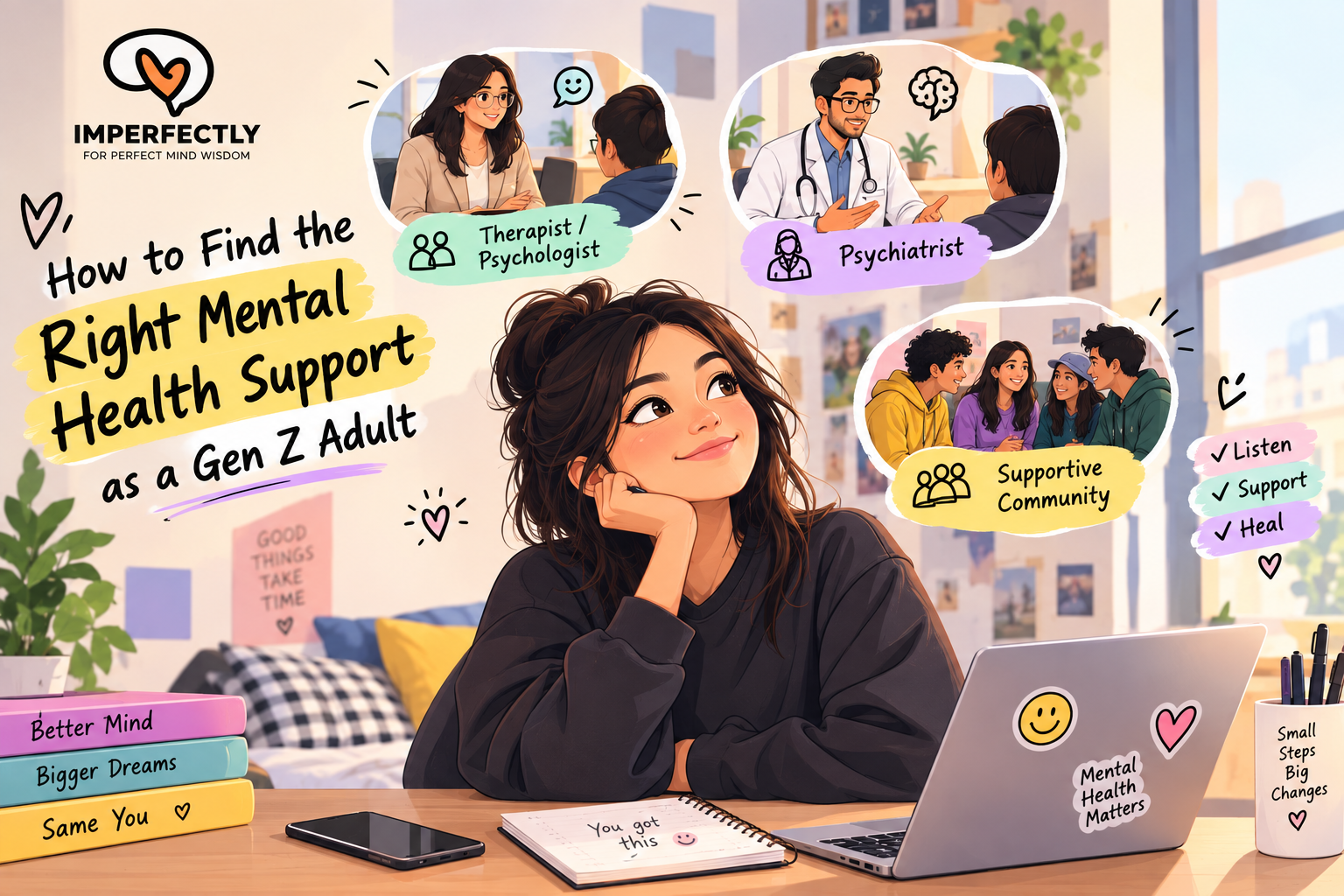
How to Find the Right Mental Health Support as a Gen Z Adult
Feeling overwhelmed, disconnected, anxious, or exhausted has become a familiar experience for many people in Gen Z. Between academic pressure, work uncertainty, relationships, social media, financial stress, and constant news, it can be difficult to know when everyday stress has become something that deserves professional support.
The important thing to know is this: you do not need to wait until you reach a breaking point to ask for help. Mental health services are not only for people in crisis. They can also help you understand what you are feeling, build coping skills, improve relationships, and feel more in control of your life.
This guide explains how to recognize when support may help, what types of services are available, and how to take the first step without feeling pressured to have everything figured out.
How do you know when it may be time to seek help?
There is no single test that tells you whether you “need” therapy. A useful question is whether your thoughts, emotions, or behavior are making daily life harder or stopping you from doing things that matter to you.
Professional support may be worth considering if you have noticed:
- Persistent sadness, anxiety, irritability, numbness, or hopelessness
- Major changes in sleep, appetite, energy, or concentration
- Feeling unable to keep up with school, work, relationships, or personal responsibilities
- Repeated panic, intrusive thoughts, or intense fear
- Using alcohol, drugs, self-isolation, or other behaviors to cope
- Difficulty recovering after a stressful event, loss, breakup, or major change
- Feeling disconnected from yourself or from people around you
- Thoughts of self-harm, suicide, or not wanting to be alive
You also do not need a diagnosis before contacting a mental health professional. You can simply say, “I have not been feeling like myself and I want help understanding what is going on.” That is enough of a reason to start a conversation.
What types of mental health services are available?
“Mental health support” can mean several different things. Knowing the differences can make the process feel less confusing.
Therapy or counseling
A therapist or counselor can help you explore emotions, habits, relationships, and difficult experiences. They may use approaches such as cognitive behavioral therapy, talk therapy, trauma-informed therapy, or other evidence-based methods.
Therapy can be useful for anxiety, depression, stress, grief, relationship difficulties, low self-esteem, life transitions, and many other concerns.
A psychologist
A psychologist is a trained mental health professional who may provide therapy and psychological assessments. Depending on local regulations, some psychologists specialize in specific conditions, age groups, or treatment methods.
A psychiatrist
A psychiatrist is a medical doctor who specializes in mental health. They can assess symptoms, diagnose mental health conditions, and prescribe medication where appropriate. Some psychiatrists also provide therapy, but many focus primarily on assessment and medication management.
Support groups
Support groups bring together people who share a similar experience, such as grief, anxiety, addiction recovery, chronic illness, or caring for a family member. They may be led by a professional or organized by a community group.
A support group is not always a replacement for individual therapy, but it can reduce isolation and help you learn from people who understand what you are going through.
Primary care or general health services
A doctor or general healthcare provider can be a useful first point of contact. They can discuss your symptoms, check for possible physical factors, and refer you to an appropriate mental health professional.
Digital and text-based support
Some services offer video appointments, phone counseling, or text-based support. These options can be helpful if travel, privacy, mobility, location, or scheduling makes in-person appointments difficult.
Make sure any online service clearly explains who provides the care, how your information is handled, and what to do in an emergency.
How to choose the right mental health service
Finding a provider is not only about choosing the first available appointment. It is also about finding someone whose expertise, communication style, availability, and approach fit your needs.
Consider these questions:
- Does the provider have experience with the issue I want help with?
- Do they work with people in my age group?
- Do they offer in-person, video, phone, or text appointments?
- What are their fees, cancellation rules, and payment options?
- Are they covered by my insurance or healthcare plan, if applicable?
- Do I feel respected and comfortable asking questions?
- Can they explain their approach in simple language?
- Do they understand my culture, identity, language, or lived experience?
You can contact more than one provider before making a decision. A short introductory call or message can help you understand whether they are a good fit.
What should you say when you reach out?
You do not need to write a perfect explanation. A simple message is enough:
Hi, I have been experiencing ongoing stress and anxiety, and it is beginning to affect my daily life. I am looking for support and would like to know whether you are accepting new clients and what the first step would be.
You can also mention what you are looking for, such as help with panic attacks, relationship stress, academic pressure, grief, low mood, or difficulty managing emotions.
If you are unsure what type of service you need, say that directly. A qualified provider can help you work that out.
What happens in a first appointment?
A first appointment is usually an opportunity to understand what brought you in, how you have been feeling, and what kind of support may be useful. The provider may ask about your symptoms, daily life, history, relationships, and goals.
You can ask questions too. For example:
- What approach do you use?
- How often would we meet?
- How will we measure progress?
- What happens if I do not feel the service is helping?
- How do you handle confidentiality and privacy?
You are allowed to take time to decide whether you want to continue. One appointment does not commit you to a long-term treatment plan.
What if therapy feels uncomfortable at first?
Talking honestly about your mental health can feel uncomfortable, especially if you are used to handling everything alone. Some nervousness at the beginning is normal.
However, you should still feel safe, respected, and heard. If a provider dismisses your concerns, pressures you, violates your boundaries, or makes you feel judged, it is reasonable to look for another option.
A good fit may not happen immediately. Changing providers is not failure; it is part of finding care that works for you.
What if cost or access is a barrier?
Cost and availability are real barriers, but they do not mean you have no options. Depending on where you live, consider asking about:
- Sliding-scale fees based on income
- Community mental health centers
- Services through a school, university, or workplace
- Government-funded or nonprofit programs
- Group therapy, which may cost less than individual sessions
- Training clinics supervised by licensed professionals
- Online services with transparent pricing
- Primary care referrals
- Local peer-support groups
When contacting a provider, ask directly: “Do you offer reduced-fee appointments or know of lower-cost services in my area?” Many people are hesitant to ask, but it is a practical question and providers may be able to suggest alternatives.
When should you seek urgent help?
If you may hurt yourself or someone else, cannot stay safe, or are experiencing a mental health emergency, seek immediate help through your local emergency service or crisis line. If possible, move away from anything you could use to cause harm and contact someone you trust who can stay with you.
Do not rely on a blog post for emergency support. Immediate safety comes first.
You do not have to figure it out alone
Reaching out for mental health support is not a sign that you are weak or incapable. It is a practical step toward understanding yourself and getting the right tools for what you are facing.
Start small. Write down what has been difficult lately. Ask one trusted person for support. Contact one qualified provider. You do not need to solve your entire life before making the first appointment.
If you are ready to explore support, contact our team to discuss your needs and learn which mental health service may be the right starting point for you.
Start Your Mental Wellness Journey Today with Imperfectly
At Imperfectly, mental healthcare is designed around the reality that emotional wellbeing is rarely just about one issue. Whether you need support understanding difficult emotions, managing stress, navigating relationships, or addressing a more complex mental-health concern, Imperfectly connects you with experienced mental-health and healthcare professionals in one accessible platform. Through its 360° approach, you can connect with Psychiatrists, Psychologists, Life Coaches, and Physicians, choose online or in-clinic appointments, and keep important wellness information organised in one place. Visit Imperfectly
Download the Imperfectly App
 Connect with experienced Psychiatrists, Psychologists, Life Coaches, and Physicians.
 Book online or in-clinic appointments in minutes.
 Track your recovery journey with personalized wellness insights.
 Access secure prescriptions, therapy notes, and medical records anytime.
 Experience complete 360° mental healthcare in one application.
Contact Imperfectly
Imperfectly – Your Trusted 360° Mental Health Platform
 Website: imperfectly.co
Patient Portal: Imperfectly Patient Portal
 Phone: +91 8448073838
 Email: admin@imperfectly.co