

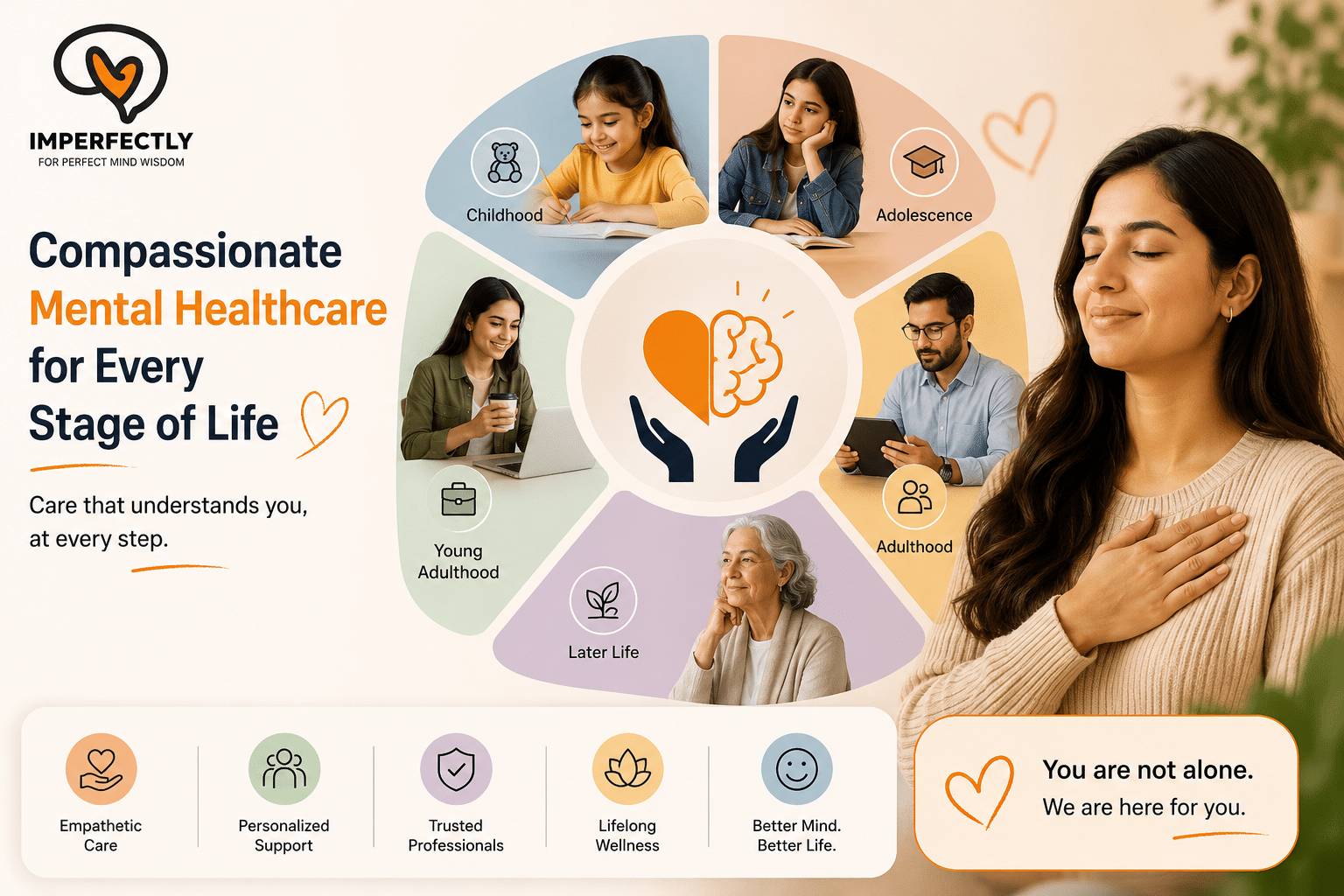
Compassionate Mental Healthcare for Every Stage of Life
Mental health needs evolve throughout life. The emotional challenges of a teenager preparing for exams are very different from those of a working professional facing burnout or an older adult adjusting to retirement. Yet, one mistake I have repeatedly seen over the years is treating every individual with the same advice, the same expectations, and sometimes even the same treatment approach.
After spending more than a decade working alongside psychiatrists, psychologists, and mental health professionals, one lesson has remained consistent: successful mental healthcare begins with understanding the person before addressing the condition.
It is recognizes that emotional needs change as people grow. Rather than offering the same advice to everyone, effective care adapts to age, life experiences, personal goals, and individual challenges.
Compassionate care goes beyond diagnosing symptoms. It means listening without judgment, understanding each person’s experiences, and developing a treatment plan that fits their stage of life, personal circumstances, and emotional needs.
When people feel genuinely heard, they are more likely to trust the process, stay engaged with treatment, and achieve meaningful long-term improvement.
Why Compassionate Mental Healthcare for Every Stage of Life Matters
Life is constantly changing, and so are the emotional challenges that come with it.
A teenager may struggle with academic pressure, while a young adult may experience anxiety related to career uncertainty. Parents often carry the emotional weight of balancing family and professional responsibilities, whereas older adults may face loneliness, grief, or health-related concerns.
Although these experiences differ, one thing remains the same: everyone deserves compassionate and individualized support.
Recognizing these differences allows mental health professionals to provide care that truly reflects each person’s circumstances instead of relying on a one-size-fits-all approach.
Why Compassion Matters in Mental Healthcare
Many people remember how a healthcare professional made them feel long after they forget the advice they received.
In my experience, individuals are far more willing to discuss difficult emotions when they know they are speaking with someone who listens patiently, avoids judgment, and genuinely wants to help.
Compassion creates a safe environment where people can openly discuss anxiety, depression, trauma, relationship concerns, or emotional struggles without fear of being criticized.
That sense of emotional safety often becomes the first step toward healing.
Compassionate Mental Healthcare for Children and Adolescents
Mental health challenges can begin much earlier than many parents realize.
However, children often express emotional distress differently from adults.
Behavioural Changes That May Need Compassionate Mental Healthcare
Irritability, social withdrawal, declining academic performance, or sudden emotional outbursts may indicate underlying concerns rather than simple misbehavior.
Building Emotional Skills Early
Teaching children healthy ways to express emotions and cope with stress often reduces the likelihood of more serious difficulties later in life.
Early professional guidance also helps families better understand how to support their children at home.
Compassionate Mental Healthcare for Young Adults
The transition into adulthood brings excitement, but it also introduces uncertainty.
Many young adults struggle with:
- Career choices
- Financial independence
- Academic pressure
- Relationship challenges
- Self-confidence
- Social comparison
One common mistake is assuming these struggles are “just part of growing up.”
While adjustment difficulties are normal, persistent emotional distress should never be ignored.
Professional support can help young adults develop practical coping strategies before problems begin affecting their confidence or overall well-being.
Compassionate Mental Healthcare for Working Professionals
Working professionals frequently delay seeking help because they believe stress is simply part of success.
Unfortunately, this mindset often leads to burnout.
Over the years, I’ve seen many professionals ignore early warning signs such as:
Emotional Exhaustion May Require Compassionate Mental Healthcare
Feeling mentally drained even after weekends or vacations.
Difficulty Concentrating
Simple decisions begin taking much longer than usual.
Increased Irritability
Small workplace challenges suddenly feel overwhelming.
Addressing these symptoms early often prevents more serious mental health conditions from developing.
Compassionate Mental Healthcare for Older Adults
Mental healthcare remains equally important as people grow older.
Unfortunately, many older adults hesitate to seek emotional support because previous generations often viewed mental health differently.
Common challenges include:
- Retirement adjustment
- Grief and loss
- Chronic illness
- Loneliness
- Reduced social interaction
Compassionate care acknowledges these experiences while helping individuals maintain emotional resilience and a sense of purpose.
Common Mistakes People Make Before Seeking Help
Throughout years of clinical observation, several patterns appear repeatedly.
Waiting Too Long to Seek Compassionate Mental Healthcare
People often believe they should manage emotional struggles entirely on their own.
Seeking help early usually makes recovery easier.
Comparing Personal Struggles
Some individuals avoid treatment because they feel others are facing greater hardships.
Every person’s emotional experience deserves attention.
Expecting Immediate Results
Meaningful progress rarely happens overnight.
Mental wellness develops through consistent support, healthy habits, and patience.
How Compassionate Mental Healthcare Creates Better Outcomes
One lesson that continues to stand out is that no two treatment journeys are identical.
Even individuals with similar diagnoses often require different approaches depending on their:
- Personality
- Lifestyle
- Family environment
- Physical health
- Personal goals
Personalized care allows mental health professionals to adapt treatment as people’s needs change over time.
This flexibility often leads to better engagement and more sustainable progress.
The Importance of Ongoing Support
Mental healthcare should not end after a single appointment.
Life continues to present new challenges, and emotional needs naturally evolve.
Regular follow-ups allow healthcare professionals to monitor progress, adjust treatment when necessary, and celebrate milestones throughout the recovery journey.
This continuous relationship often provides the reassurance people need to remain committed to their mental wellness.
Compassionate Mental Healthcare Supports Lifelong Wellness
After years of working in mental healthcare, one truth remains undeniable: people heal more effectively when they feel respected, understood, and supported.
Ultimately, compassionate mental healthcare for every stage of life ensures that every individual receives support that reflects their unique circumstances. Whether someone is facing childhood anxiety, workplace burnout, relationship challenges, or emotional changes later in life, personalized care can make recovery more meaningful and sustainable.
Compassion is not simply about being kind.
It is about listening carefully, recognizing each individual’s unique experiences, and providing care that adapts throughout every stage of life.
Whether someone is seeking support for anxiety, depression, stress, trauma, or personal growth, compassionate mental healthcare for every stage of life empowers individuals to move forward with greater confidence, resilience, and hope.
Start Your Mental Wellness Journey Today with Imperfectly
At Imperfectly, we believe every individual deserves compassionate, personalized mental healthcare regardless of age or life stage. Our platform brings together experienced psychiatrists, psychologists, life coaches, and physicians to deliver coordinated care tailored to your unique needs. Whether you’re seeking support for stress, anxiety, depression, relationship challenges, or personal growth, Imperfectly offers a secure and convenient way to access expert care. With online consultations, appointment scheduling, progress tracking, and digital health records, we make it easier to stay connected to the support you need—today and throughout your lifelong mental wellness journey.
Download the Imperfectly App
📱 Connect with experienced Psychiatrists, Psychologists, Life Coaches, and Physicians.
📅 Book online or in-clinic appointments in minutes.
📈 Track your recovery journey with personalized wellness insights.
🔒 Access secure prescriptions, therapy notes, and medical records anytime.
💙 Experience complete 360° mental healthcare in one application.
Contact Imperfectly
Imperfectly – Your Trusted 360° Mental Health Platform
🌐 Website: https://imperfectly.co
📱 Patient Portal: https://imperfectly.co/application/
📞 Phone: +91 8448073838
📧 Email: admin@imperfectly.co