

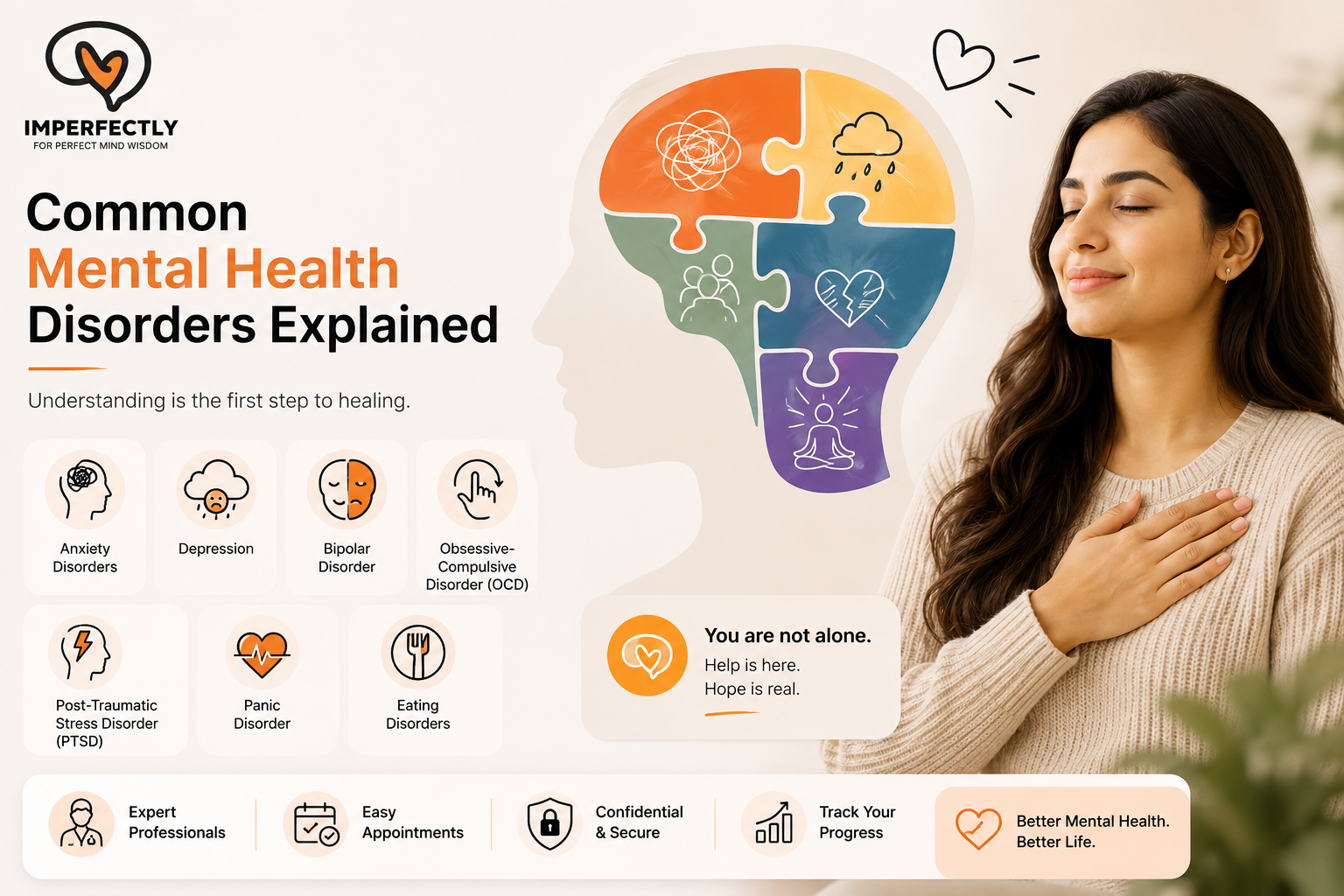
Common Mental Health Disorders Explained
One of the biggest misconceptions I’ve encountered after more than a decade of working alongside psychiatrists, psychologists, and mental health professionals is that people often believe mental health disorders are easy to identify. In reality, they rarely look the way movies or social media portray them.
Many individuals continue going to work, raising families, attending college, and smiling in public while quietly struggling with anxiety, depression, trauma, or other mental health conditions. Consequently, these disorders often remain unnoticed until they begin affecting relationships, careers, or physical health.
Another common mistake is assuming that everyone experiences a mental health disorder in the same way. Two people may receive the same diagnosis, yet their symptoms, coping abilities, and recovery journey can be completely different.
Understanding the most common mental health disorders is the first step toward recognizing when professional support may be needed—not only for ourselves but also for those around us.
Mental Health Disorders Are More Common Than Most People Think
Over the years, one pattern has become very clear.
Many people delay seeking help because they assume their struggles are simply part of everyday life.
While stress, sadness, or worry are natural human emotions, they become a concern when they persist for weeks, interfere with daily functioning, or begin affecting work, relationships, sleep, or physical health.
Mental health disorders are medical conditions—not personality flaws or signs of weakness.
The earlier they are identified, the better the chances of successful treatment and long-term recovery.
Anxiety Disorders
Among all mental health conditions, anxiety disorders are some of the most frequently diagnosed.
However, anxiety isn’t simply “worrying too much.”
From clinical experience, people with anxiety often describe feeling constantly alert, as though their brain refuses to switch off.
Common Signs
- Persistent excessive worry
- Difficulty concentrating
- Racing thoughts
- Muscle tension
- Rapid heartbeat
- Sleep disturbances
- Constant fear that something bad will happen
Many individuals wait months before seeking help because they believe they simply need to “relax.”
Unfortunately, untreated anxiety often becomes more difficult to manage over time.
Depression
Depression is far more complex than feeling sad.
One of the biggest surprises for many people is that sadness isn’t always the most noticeable symptom.
In practice, individuals often describe:
Emotional Numbness
Instead of feeling emotional, they feel nothing at all.
Loss of Interest
Activities they once enjoyed no longer bring satisfaction.
Persistent Fatigue
Even after adequate sleep, they feel physically and emotionally exhausted.
Many people continue functioning while silently battling depression, which is why it often goes unnoticed by friends and family.
Bipolar Disorder
Bipolar disorder is commonly misunderstood.
People often assume it simply involves frequent mood swings.
In reality, mood episodes usually last days or weeks—not hours.
Depressive Episodes
Low mood, hopelessness, reduced energy, and loss of motivation.
Manic or Hypomanic Episodes
Unusually high energy, reduced need for sleep, impulsive decisions, excessive confidence, or rapid speech.
Without proper diagnosis, bipolar disorder is sometimes mistaken for depression alone, which may delay appropriate treatment.
Obsessive-Compulsive Disorder (OCD)
Many people casually describe themselves as “a little OCD.”
However, true OCD goes far beyond liking things neat or organized.
Individuals with OCD experience recurring intrusive thoughts that create significant anxiety.
To reduce that anxiety, they often perform repetitive behaviors known as compulsions.
Examples Include
- Excessive handwashing
- Repeated checking of locks or appliances
- Counting rituals
- Constant reassurance seeking
- Intrusive unwanted thoughts
One important lesson from years of practice is that people with OCD usually recognize these thoughts are irrational—but they still feel unable to stop them without treatment.
Post-Traumatic Stress Disorder (PTSD)
PTSD develops after experiencing or witnessing a traumatic event.
Contrary to popular belief, trauma isn’t limited to military combat.
It may result from:
- Serious accidents
- Physical assault
- Emotional abuse
- Childhood neglect
- Natural disasters
- Medical emergencies
- Domestic violence
Common Symptoms
- Flashbacks
- Nightmares
- Emotional numbness
- Avoiding reminders of the event
- Constant hypervigilance
- Difficulty trusting others
Trauma affects people differently, which is why professional support is often essential for recovery.
Panic Disorder
People experiencing their first panic attack frequently believe they are having a heart attack.
I’ve seen individuals visit emergency departments multiple times before discovering the true cause.
Symptoms often include:
- Chest pain
- Shortness of breath
- Sweating
- Dizziness
- Shaking
- Feeling detached from reality
- Fear of losing control
Although panic attacks feel frightening, they are treatable with the right combination of therapy and, when appropriate, medication.
Eating Disorders
Eating disorders are often misunderstood as being solely about food.
In reality, they usually involve emotional distress, self-esteem, perfectionism, or attempts to regain control during difficult periods.
These conditions may include:
Anorexia Nervosa
Restricting food despite being underweight.
Bulimia Nervosa
Episodes of eating unusually large amounts of food followed by behaviors intended to compensate.
Binge Eating Disorder
Frequent episodes of eating large amounts of food accompanied by guilt or distress.
Early intervention significantly improves recovery outcomes.
Common Mistakes That Delay Recovery
Throughout my experience, several patterns repeatedly prevent people from receiving timely care.
Ignoring Early Symptoms
Many individuals wait until symptoms begin affecting every aspect of their lives.
Self-Diagnosing Online
Although online information can be helpful, it cannot replace a professional evaluation.
Comparing Yourself to Others
Mental health experiences are deeply personal.
Someone else’s symptoms should never determine whether your own concerns deserve attention.
Stopping Treatment Too Soon
Feeling better doesn’t always mean recovery is complete.
Consistent follow-up often prevents relapse.
When Should You Seek Professional Help?
One practical guideline I often share is this:
If emotional symptoms continue for several weeks and begin interfering with daily responsibilities, relationships, sleep, appetite, or overall quality of life, it is time to speak with a mental health professional.
Early treatment often requires less intensive intervention than waiting until symptoms become severe.
Seeking help early is one of the smartest decisions a person can make.
Recovery Looks Different for Everyone
One of the most rewarding aspects of mental healthcare is seeing people regain confidence, rebuild relationships, and rediscover purpose.
Recovery rarely happens in a straight line.
Some weeks feel encouraging.
Others feel challenging.
That doesn’t mean treatment isn’t working.
With the right support, personalized care, healthy coping strategies, and patience, most people can learn to manage their condition successfully and live meaningful, fulfilling lives.
The goal isn’t perfection—it’s progress, resilience, and a better quality of life.
Start Your Mental Wellness Journey Today with Imperfectly
Mental health is not one-size-fits-all, and neither should your care be. At Imperfectly, we provide personalized mental healthcare by connecting you with experienced psychiatrists, psychologists, life coaches, and physicians who understand your unique needs. Whether you’re seeking support for anxiety, depression, stress, trauma, or simply looking to improve your emotional well-being, our integrated platform makes expert care accessible and convenient. From online consultations and secure medical records to recovery tracking and continuous guidance, Imperfectly is designed to support you at every stage of your mental wellness journey.
Download the Imperfectly App
📱 Connect with experienced Psychiatrists, Psychologists, Life Coaches, and Physicians
📅 Book online or in-clinic appointments in minutes.
📈 Track your recovery journey with personalized wellness insights.
🔒 Access secure prescriptions, therapy notes, and medical records anytime.
💙 Experience complete 360° mental healthcare in one application.
Contact Imperfectly
Imperfectly – Your Trusted 360° Mental Health Platform
🌐 Website: https://imperfectly.co
📱 Patient Portal: https://imperfectly.co/application/
📞 Phone: +91 8448073838
📧 Email: admin@imperfectly.co